
Triumph Hurdle Betting: The Data-Led Guide to Cheltenham's Premier Juvenile Hurdle
Trends. Trials. Value. The data-led Triumph Hurdle playbook.
Start Reading
Best Horse Racing Betting Sites – Bet on Horse Racing in 2026
Loading...
Triumph Hurdle Betting: The Data-Led Guide to Cheltenham's Premier Juvenile Hurdle
Triumph Hurdle betting sits at a peculiar intersection of opportunity and chaos. This is a Grade 1 race restricted to four-year-olds, many of whom have raced just two or three times over hurdles, and the market reflects that uncertainty in ways that reward preparation. The Cheltenham Festival week in which it takes place generates an estimated £450 million in betting turnover across the UK industry, with Flutter Entertainment's brands alone processing over 37 million individual bets during the 2025 edition. Within that vast ocean of activity, the Triumph Hurdle — now the JCB Triumph Hurdle — opens the card on Gold Cup Friday, setting the tone for the biggest day of the meeting.
What makes this race a compelling betting puzzle is its dual nature. On one hand, the data tells clear stories: favourites have won five of the last twelve renewals, Irish-trained runners have taken nine of twelve, and 17 of the last 21 winners started at 10/1 or shorter. On the other, a horse named Poniros won at 100/1 in 2025. That kind of range demands a framework, not a hunch — and this guide builds one. From trial-race pipelines and trainer records to each-way value thresholds and odds comparison, every section here is constructed around verifiable patterns and first-party data. This is the data-led playbook for a race that punishes lazy analysis and rewards those who do the work before the tapes go up.
The Triumph Hurdle Betting Cheat Sheet: Five Numbers That Frame the Race
- Favourites have won 5 of 12 recent renewals (42% strike rate), but the 2025 edition produced a 100/1 winner — form filters matter more than blind market trust.
- Irish-trained runners have taken 9 of the last 12, with Willie Mullins winning 5 of 6 since 2020. The Spring Juvenile Hurdle at Leopardstown is the single most predictive trial, producing 6 of 12 winners.
- Each-way betting surged 25% at the 2024 Festival. The optimal range for Triumph Hurdle each-way bets is 8/1 to 25/1, with four or more paid places in fields of 16+.
- An official rating near 140 and recent placed form (10 of 12 winners placed last time out) are the strongest pre-race filters available.
- Compare odds across at least five bookmakers and secure Best Odds Guaranteed — the price gap on the same runner routinely exceeds two points during Cheltenham week.
The Triumph Hurdle at a Glance: Scale, Stakes and Significance
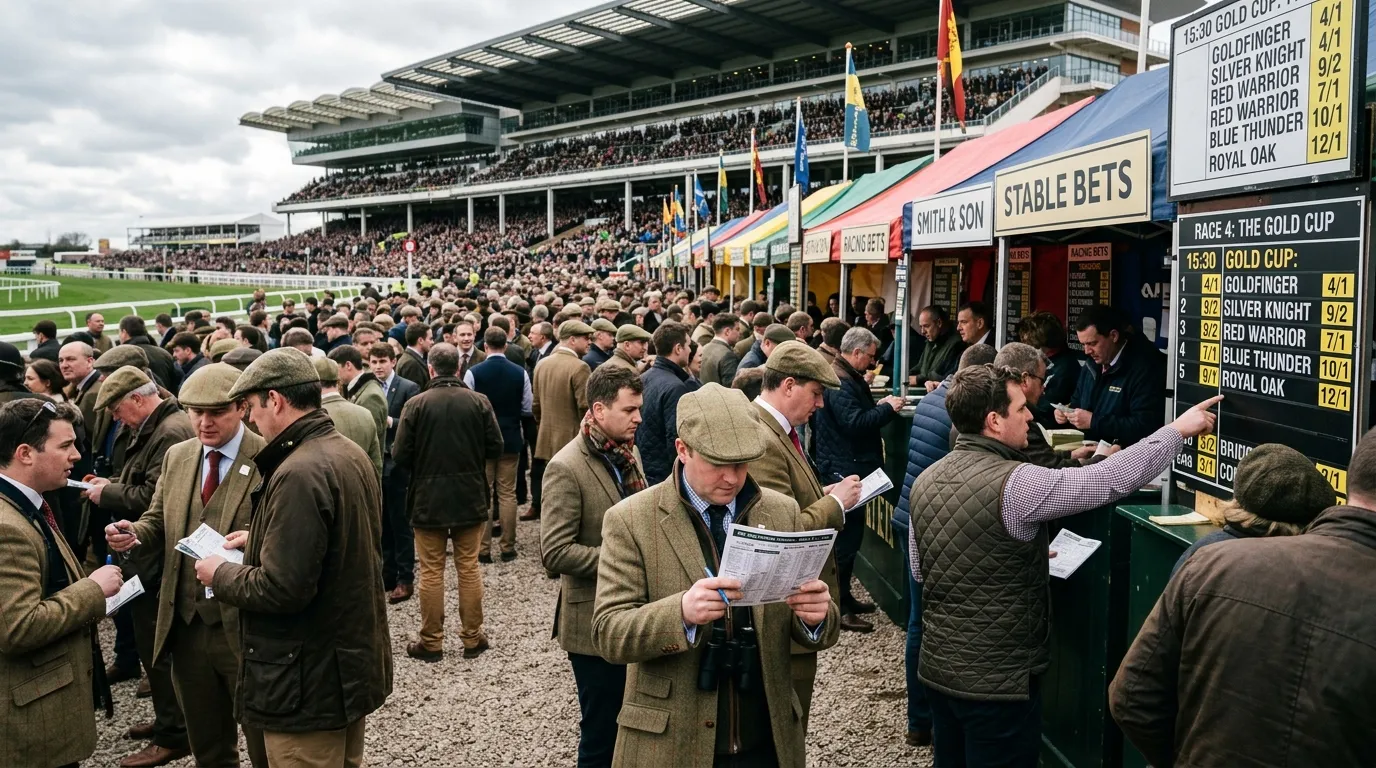
The Cheltenham Festival is not just the centrepiece of the National Hunt calendar — it is the single most concentrated betting event in British sport. William Hill projects the 2026 edition will attract £450 million in wagers across the UK industry, and that figure understates the global interest. In 2025, Flutter Entertainment's online brands — Paddy Power, Betfair and Sky Bet — handled over 37 million bets across the four days, with turnover exceeding £250 million from those three operators alone. "We delivered a great customer proposition for our flagship brands, with a series of recent product upgrades and marketing campaigns driving strong staking levels," said Dom Crosthwaite, Chief Trading Officer at Flutter Entertainment.
To understand why the Triumph Hurdle matters within this ecosystem, consider how betting volume distributes across the Festival. All 28 races at the 2025 Cheltenham Festival ranked inside the top 31 by annual betting turnover at William Hill — only the Grand National, the Derby and the Scottish Grand National joined them. The Triumph Hurdle, as the opening race on Friday, draws disproportionate attention: punters arriving fresh for Gold Cup Day tend to bet aggressively on the card opener, and the juvenile-hurdle format, with its unpredictable runners, creates a wide-open market that encourages each-way and speculative activity.
The economic footprint extends well beyond the bookmakers. A University of Gloucestershire study estimated that the 2022 Festival contributed £274 million to the Gloucestershire economy through hospitality, accommodation, transport and ancillary spending. Attendance has fluctuated since that peak year — the 2025 Festival drew 218,839 spectators over four days, a 22% decline from the record 280,627 set in 2022 — but the betting volume tells a different story. Remote wagering has absorbed what on-course activity has lost. Optimove Insights analysed 68.8 million bets placed during the 2025 Festival and found that daily active bettors surged 178–189% above baseline levels, with new depositing customers up between 310% and 417%. Average bet size rose by over 100%.
For the Triumph Hurdle bettor, these numbers are not background noise. They explain why bookmaker competition for your business is fierce during this week, why enhanced place terms and best-odds-guaranteed offers appear more frequently than at any other meeting, and why the market for a juvenile hurdle with 15–20 runners can be surprisingly liquid. The Gambling Commission's latest annual report recorded total UK gambling industry gross gaming yield at a record £16.8 billion for FY2024-25, with the online segment growing 13.1% year-on-year. The Cheltenham Festival, and the Triumph Hurdle within it, sits at the premium end of that market — the place where the industry's best offers meet the punter's sharpest analysis.
The Triumph Hurdle sits inside the most bet-upon week in British racing. With £450 million in projected industry turnover for the 2026 Festival and over 37 million online bets placed through Flutter's brands alone in 2025, bookmaker competition is intense — and that competition translates directly into better odds, enhanced terms and more value for prepared bettors.
Race Format and Conditions: What Makes This Contest Unique
The JCB Triumph Hurdle is a Grade 1 contest run over two miles and one furlong on Cheltenham's New Course. It is restricted to four-year-olds — the youngest horses permitted to race over hurdles in Britain and Ireland — and they jump eight flights across undulating terrain that includes the famous Cheltenham hill on the run to the final hurdle. These conditions matter for bettors because they create a specific set of demands: stamina over the stiff uphill finish, jumping competence at speed, and the physical maturity to cope with a large, competitive field on a track that punishes the inexperienced.
Weights are set at a standard level, with colts and geldings carrying 11st 0lb and fillies receiving a 3lb sex allowance at 10st 11lb. That allowance has produced occasional value — fillies are underbet relative to the statistical edge the weight concession provides — and it is worth noting when assessing runners in the final declarations. There is no handicap element: this is a level-weights contest determined by quality, fitness and adaptability.
The race holds considerable prestige within the broader prize money structure of British racing. Total prize money across all British fixtures reached £153 million in 2025, an increase of £4.7 million on the previous year, with Premier fixtures like the Cheltenham Festival receiving the largest allocations. The Triumph Hurdle typically carries a purse in excess of £100,000 to the winner, making it one of the most valuable juvenile hurdle races in Europe. For owners and trainers, the financial incentive is obvious; for bettors, it means the best four-year-olds are targeted at this race rather than easier alternatives.
Understanding the course layout matters practically. Cheltenham's New Course finishes with an uphill climb that saps horses who have raced too keenly early on. Runners that sit midfield and travel economically through the first mile tend to be better positioned than front-runners, though the 2025 winner Poniros broke that pattern by being held up in midfield before staying on powerfully up the hill. The final flight sits at the foot of the hill, and several memorable Triumph Hurdles have been decided by last-hurdle dramas — Goshen's fall when clear at the final obstacle in 2020 remains the starkest example of why jumping proficiency is non-negotiable in this contest.
The Triumph Hurdle's format — Grade 1, level weights, 4yo only, eight hurdles on the New Course — filters for horses with genuine class, sound jumping and the stamina to handle Cheltenham's hill. Fillies carry 3lb less, creating a subtle each-way angle that the market often underprices.
From Hurst Park to Prestbury Park: A Race That Made Champions
The Triumph Hurdle has been producing headlines since 1939, when it was first run at Hurst Park racecourse in Surrey — a venue that no longer exists. For its first quarter-century, the race belonged largely to French-trained runners: six of the first seven winners came from across the Channel, exploiting France's tradition of campaigning four-year-olds in early-season hurdle races. The most famous name from this era was a jockey, not a horse — Lester Piggott, the greatest flat rider of his generation, rode Prince Charlemagne to win the 1954 running.
The race moved to Cheltenham in 1965 and joined the Festival programme three years later, transforming its status overnight. Sponsorship by the Daily Express brought visibility, and the quality of fields deepened. The late 1960s produced the race's most important historical figure: Persian War, who won the Triumph in 1967 before claiming three consecutive Champion Hurdles. That Triumph-to-Champion pathway has recurred across the decades and remains a factor in how the market prices juvenile hurdlers today.
Through the 1970s and 1980s the race consolidated its position as the definitive four-year-old hurdle test. Trainers like Fred Rimell and Nicky Henderson began targeting it deliberately, with Henderson eventually accumulating seven wins. Kribensis in 1988 became the third horse to complete the Triumph-Champion Hurdle double.
The modern era, roughly from 2005 onward, has been shaped by two structural changes. First, the introduction of the Fred Winter Juvenile Handicap Hurdle at the Festival drew away many of the less-talented juveniles, sharpening the Triumph field to something closer to a genuine Grade 1 contest rather than the cavalry charges of earlier decades. Second, Irish trainers — and Mullins in particular — recognised the race as a target for their French-bred imports, creating a pipeline from French AQPS stock through the Leopardstown spring trials and into Cheltenham.
Notable landmarks in the twenty-first century include Katchit's 2007 victory for Alan King, another Triumph winner who went on to take the Champion Hurdle a year later, and Tiger Roll's 2014 success at 10/1 for Gordon Elliott — a horse that would become a five-time Festival winner and double Grand National hero. Goshen's agonising last-flight fall when cantering clear in 2020 remains one of the most replayed moments in modern Festival history, a reminder that the obstacles in a juvenile hurdle can override even the most dominant performance.
The most recent chapter belongs to Willie Mullins, who won five of the six Triumph Hurdles between 2020 and 2025. His 2025 victory was the most extraordinary: Poniros, sent off at 100/1 as one of eleven Mullins entries, was ridden by Jonjo O'Neill Jr and stayed on powerfully to deny Lulamba and the 5/4 favourite East India Dock on the line. It was the longest-priced winner in the race's history and a perfect illustration of why this contest refuses to be tamed by form analysis alone. The Mullins era has not eliminated volatility — it has simply redistributed it, concentrating the question on which Mullins runner will prevail rather than whether one will.
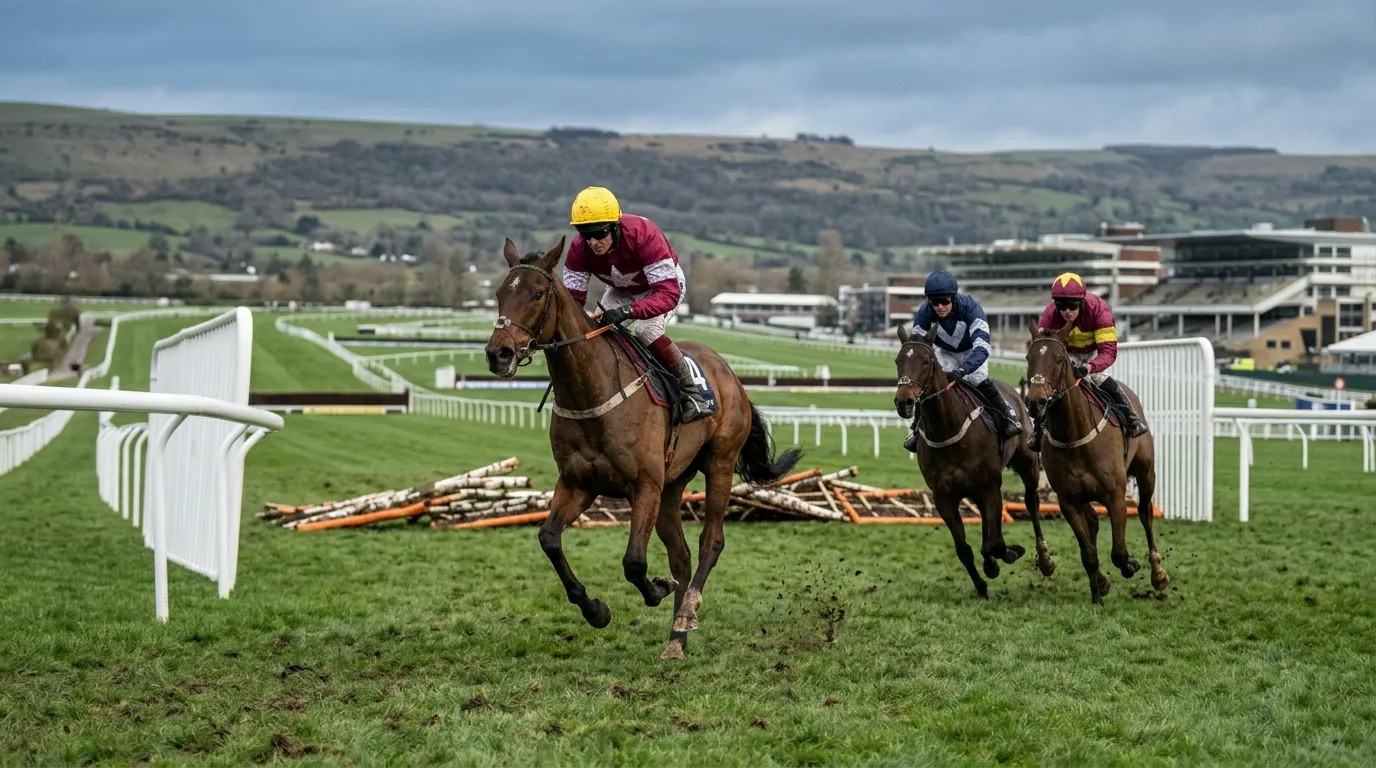
Poniros was returned at 100/1 in the 2025 Triumph Hurdle — the longest-priced winner in the race's 87-year history. He was one of eleven runners from the Mullins yard, and his jockey, Jonjo O'Neill Jr, had never ridden at the Cheltenham Festival before that week.
The Trainers and Jockeys Who Define This Race
No race at the Cheltenham Festival is defined so starkly by two trainers. Nicky Henderson holds the all-time record with seven victories, accumulated across three decades. Henderson's approach relies on British-bred or British-purchased horses developed through a methodical autumn-to-spring campaign, with Cheltenham trial meetings serving as dress rehearsals.
Mullins's method is fundamentally different: he recruits French-bred AQPS horses through agents at French sales, develops them through Irish juvenile hurdle races, and sends a squad to Cheltenham. In 2025, 11 of 17 runners were his. That saturation makes identifying the intended primary runner extraordinarily difficult — Mullins himself often lets the form decide which horse goes best on the day. Backing "any Mullins runner" would have produced five winners from six years but at average odds that barely cover the cost of all his runners. The value lies in using trial form to narrow the shortlist from eleven to two or three.
Among jockeys, Barry Geraghty leads the all-time list with five Triumph Hurdle victories, accumulated during his long association with both Henderson and Irish owners who targeted the race. Paul Townend, now Mullins's stable jockey, has three wins and rode four of the five Mullins winners between 2020 and 2024 before Jonjo O'Neill Jr took the mount on Poniros in 2025. The jockey booking on Mullins runners is a meaningful market signal: when Townend takes a Mullins runner, it typically indicates the yard's strongest hand, though the Poniros result complicates that heuristic.
The broader context for trainer performance involves the horse population. According to the BHA's 2025 Racing Report, the number of horses in training across Britain fell to 21,728 in 2025, a 2.3% decline that continues a three-year downward trend. That shrinking pool compresses the talent base for juvenile hurdlers, particularly among British trainers who rely on domestic stock rather than French imports. Mullins's recruitment advantage — sourcing from a broader European pool — becomes more significant as the British horse population contracts.
Henderson's record of seven wins reflects decades of consistent targeting. Mullins's five-from-six streak since 2020 represents a structural advantage built on French recruitment and squad depth. The betting challenge is not whether Mullins will be represented, but which of his runners carries genuine intent — and the jockey booking, particularly Townend's mount, remains the single best clue.
Statistical Patterns Every Bettor Should Track
Over the last twelve renewals, a set of statistical patterns has emerged that no serious bettor should ignore — even while acknowledging the occasional 100/1 outlier.
Favourite Strike Rate
Favourites have won five of twelve, a 42% strike rate that exceeds the implied probability at typical favourite odds of 3/1 to 7/2. A blind favourite-backing strategy would have returned a small profit — but the 2025 favourite finished nowhere while Poniros won at 100/1. The filter is a starting point, not a conclusion.
Irish Dominance
Nine of the last twelve winners were trained in Ireland, eight from either Mullins or Elliott. This reflects Ireland's deeper pool of AQPS-bred four-year-olds and a winter programme that gives Irish trainers more opportunities to campaign juveniles. The British pipeline has thinned: the BHA's June 2024 Racing Report recorded a 25% decline in horses rated 130+ in National Hunt racing over three seasons, from 706 in 2022 to 533 in 2024. That contraction directly narrows the pool of competitive British juveniles.
Starting Price Distribution
Seventeen of the last 21 winners started at 10/1 or shorter. The exceptions include a 33/1 winner and the 100/1 Poniros, but the pattern is clear: the market typically prices six to eight runners at 10/1 or shorter, and the data supports focusing on that top tier rather than chasing longshots.
Recent Form and the Staleness Penalty
Six of the last twelve winners had won their most recent start, and ten of twelve had placed. The two exceptions were Mullins runners returning from explainable below-par runs. Horses arriving off a poor performance without a clear excuse deserve scepticism.
Graded Experience and the 140 Threshold
Five of twelve winners had already won a Graded race, and all twelve had competed at Listed level or above. An official rating near 140 has emerged as a rough minimum threshold. With fewer horses in training — 21,728 in Britain, down 2.3% year-on-year — the proportion capable of reaching 140 as four-year-olds is narrowing, concentrating quality into fewer credible contenders.
Professors David Forrest and Ian McHale of the University of Liverpool have demonstrated that in racing betting markets, the concentration of profit is extreme: "34.6% of bookmakers' gross profit is generated by the top 1% of bettors by turnover, while 79.1% of profit comes from the top 10%." That concentration matters for Triumph Hurdle bettors because it indicates that the market is shaped disproportionately by a small number of sharp stakers whose opinions are reflected in the starting price. When the SP distribution is tight — as it usually is in this race — it is because informed money has converged on a shortlist.
Over-Round
The average over-round for the Triumph Hurdle over the past 20 years sits at approximately 121%, according to OLBG data — competitive by National Hunt standards. That means the total implied probabilities sum to 121%, leaving a 21% margin for bookmakers. Individual races have ranged from 113% to 130%. Comparing over-rounds across bookmakers on the day is a practical way to identify the most competitive prices.
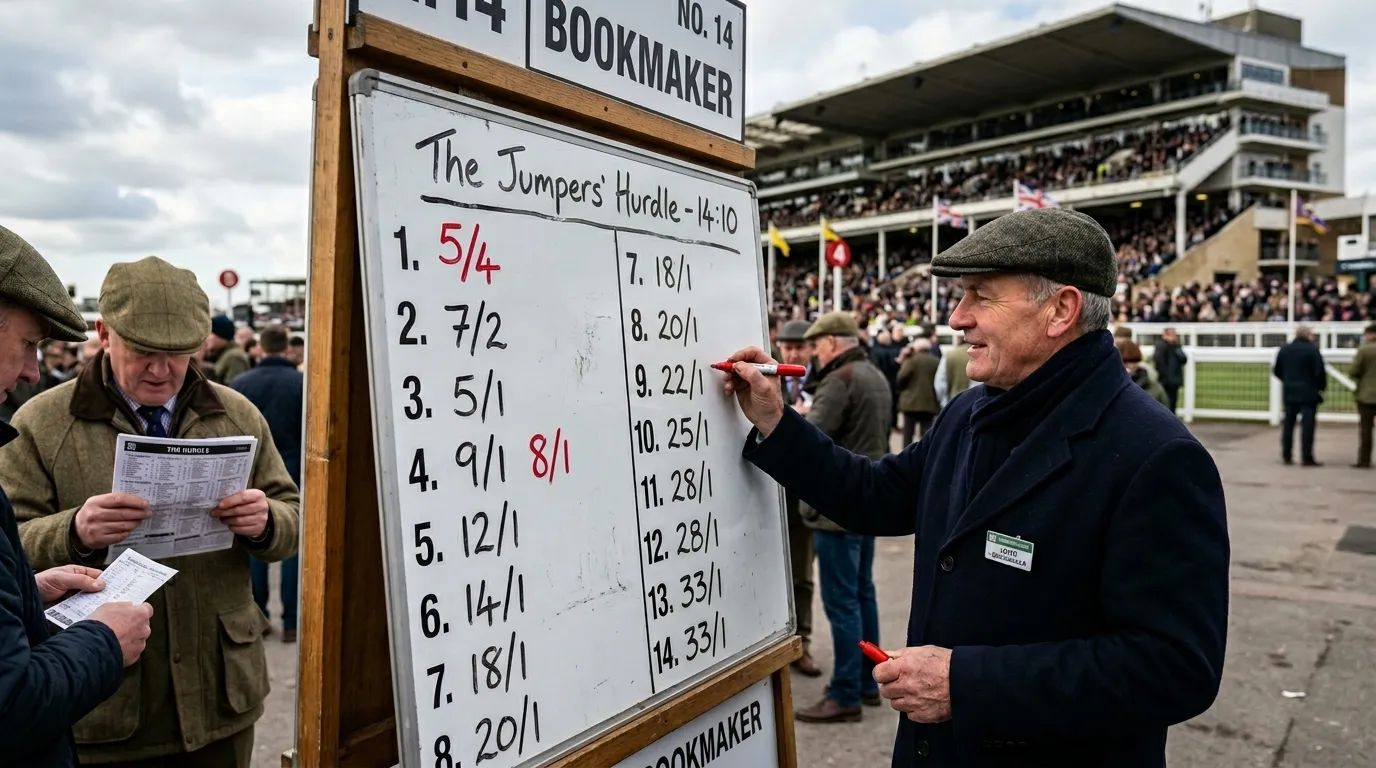
The core filters for Triumph Hurdle betting: 10/1 or shorter (17/21 winners), Irish-trained (9/12), won or placed last time (10/12), Graded experience and an OR near 140. These patterns do not guarantee winners, but they narrow the field from 15–20 runners to a shortlist of four or five — where the real analysis begins.
The Trial Race Pipeline: From Leopardstown to Cheltenham Hill
If the Triumph Hurdle is a final exam, the trial races are the coursework — and the correlation between trial performance and Festival results is stronger here than in almost any other race at the meeting. The reason is structural: four-year-old hurdlers have limited racing histories, so each trial run provides a disproportionate share of the available form evidence. A single performance at Leopardstown in February can shift a horse from 33/1 to 5/1 overnight.
The most important trial is the Spring Juvenile Hurdle at Leopardstown, run during the Dublin Racing Festival in early February. Six of the last twelve Triumph Hurdle winners ran in this race, making it by far the most reliable feeder. The Spring Juvenile is a Grade 1 contest itself, and its field typically includes the strongest Irish-trained juveniles, meaning the form lines transfer directly to Cheltenham. Winning the Spring Juvenile does not guarantee a Triumph Hurdle victory — several winners of the Leopardstown race have underperformed at Cheltenham — but placing in the first three at Leopardstown has been a near-essential credential for Irish-trained Triumph Hurdle winners.
In England, the Adonis Juvenile Hurdle at Kempton in late February serves as the primary domestic trial. It is a Grade 2 on a flat, right-handed track bearing little resemblance to Cheltenham, and its winners have a mixed Triumph record. Its chief value is as a cross-reference: when an Adonis runner re-opposes a Spring Juvenile runner, the relative performances provide a direct comparison.
Three Cheltenham trials also merit attention: the Triumph Hurdle Trial in January, the Finesse Juvenile Hurdle (now the JCB Juvenile Hurdle Trial) and the International Hurdle meeting card in December. These are lower-grade contests, but they offer the unique advantage of course experience. A horse that has negotiated Cheltenham's undulations, jumped the hurdles on the New Course and handled the noise of a Festival-week crowd (at least in a scaled-down version) arrives at the Triumph with a tangible advantage over debutants on the course. In a field of 15–20 runners, course experience — or the lack of it — can be worth several lengths.
The French-bred dimension adds another layer to the trial pipeline. Eleven of the last sixteen Triumph Hurdle winners were bred in France, typically AQPS horses purchased through Irish agents and campaigned through the Irish juvenile hurdle programme. These horses often appear in French juvenile hurdles or flat races before being imported, meaning their form book includes runs that are unfamiliar to most British punters. The key to decoding this form is to follow the specialist form databases that track French-to-Ireland transfers, rather than relying solely on British or Irish form figures.
The practical takeaway for the 2026 Triumph Hurdle is straightforward. Start with the Spring Juvenile Hurdle form from Leopardstown. Cross-reference with any Cheltenham trial form. Check whether the horse has demonstrated an ability to handle left-handed tracks with uphill finishes. And if the horse is French-bred and trained by Mullins, recognise that you are dealing with a type that has won this race more frequently than any other profile in the modern era.
Trial races narrow the field; the next question is how to build a betting framework around what those trials reveal.
A Framework for Triumph Hurdle Betting Decisions
A betting framework for the Triumph Hurdle needs to do two things: filter the field to a manageable shortlist, then identify where the odds offer value against the probability those filters imply. This is easier said than done in a race where juveniles can improve dramatically between runs, but the historical data provides a reliable sequence of checks that have held up across different market conditions.
Step One: Trial Form Check
Begin with the trial results. Has the horse run in the Spring Juvenile Hurdle at Leopardstown, the Adonis at Kempton, or any of the three Cheltenham trials? If yes, how did it perform relative to its rivals? Horses arriving without a recognisable trial form — coming instead from a maiden hurdle or a novice event with no Grade 1 or Grade 2 context — face a steep step up in class. They can win (Poniros had no conventional trial form), but the probability is against them.
Step Two: Assess the Official Rating
Filter for an OR of approximately 140 or above. This threshold is not absolute, but it captures the quality level that modern Triumph Hurdle winners typically reach before the race. Horses with an OR below 135 have won only occasionally in the past two decades, and those exceptions were generally improving types whose rating did not yet reflect their ability. If you are backing a horse rated below 140, you are betting on projection rather than established quality — a valid approach, but one that demands a higher return to justify the risk.
Step Three: Trainer and Jockey Filter
The Henderson-Mullins axis accounts for the vast majority of winners. Beyond those two, Gordon Elliott has produced winners (Tiger Roll, 2014), and Henry de Bromhead and other Irish trainers occasionally compete at this level. British trainers outside Henderson have a poor record. The jockey booking — particularly Townend on a Mullins runner — is a signal worth weighting, though the 2025 result (O'Neill Jr, not Townend, on the winner) means it should inform rather than determine.
Step Four: Compare Odds Across Bookmakers
Once you have a shortlist of two to four runners, compare odds across at least five bookmakers. The goal is to identify the best price for your selection and, where possible, to secure a best-odds-guaranteed (BOG) deal. On Cheltenham Friday, the market moves sharply in the final hour before the race, and locking in an early price with BOG protection gives you the benefit of any further drift without the downside of a contraction.
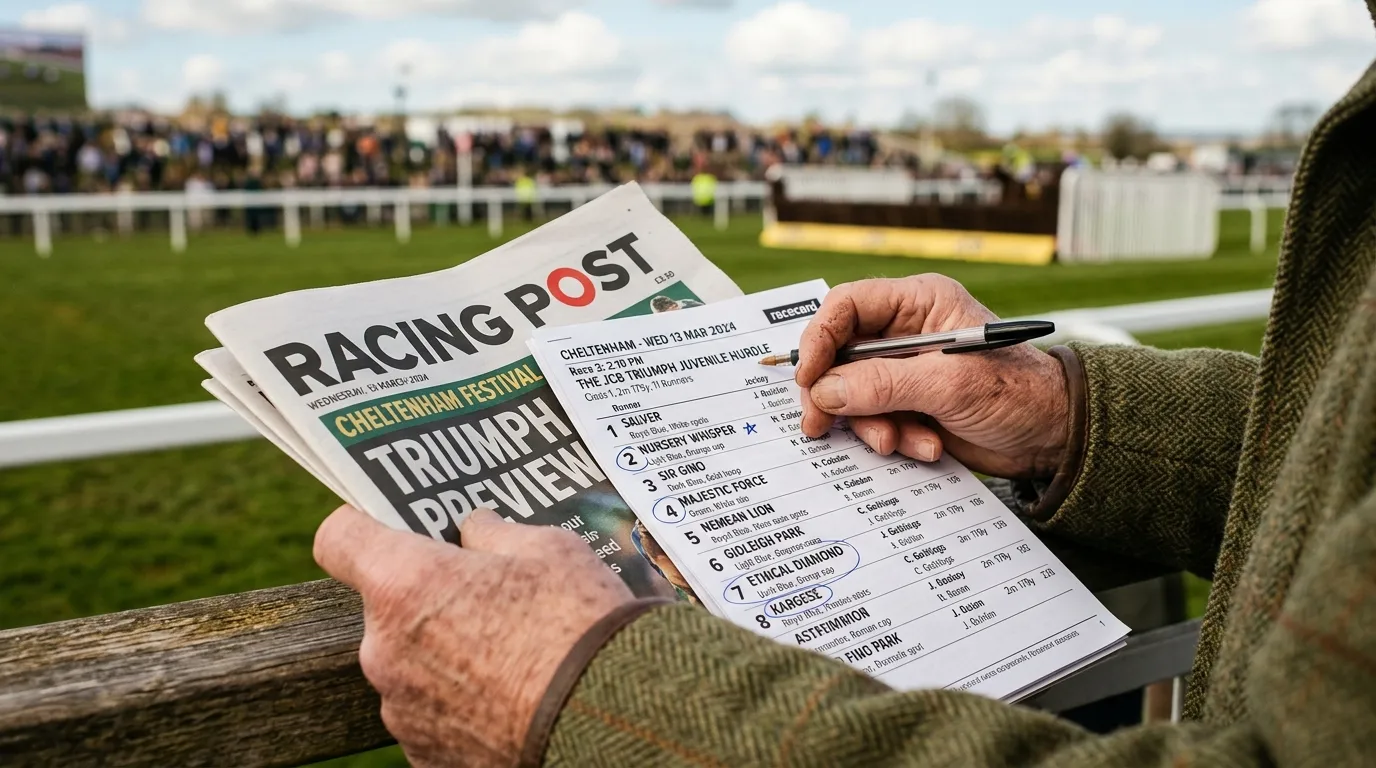
This framework operates within a broader market context worth understanding. Gambling Commission data shows horse racing generated £766.7 million in gross gaming yield from online betting in FY2024-25. Yet the market is polarising: the BHA's Q3 2025 Racing Report found average turnover per race fell 5.8% year-on-year, while Premier fixtures like Cheltenham saw per-race turnover rise 2.7%. Casual bettors are concentrating activity on the biggest events, sharpening competition and odds at meetings like the Festival.
Online horse racing turnover in Great Britain totalled £8.73 billion in FY2023-24, down from £10 billion in FY2021-22 — a real-terms decline of roughly 26% when inflation is factored in. The BHA has acknowledged the shift: "This preference for our highest profile fixtures is undoubtedly linked to the impact of affordability checks with there being fewer larger staking customers, who have either stopped betting or are placing their bets elsewhere." The remaining Festival activity is concentrated among informed, engaged bettors — making the Triumph Hurdle market competitive and relatively efficient.
Research cited by NatCen shows the top 1% of racing bettors by turnover — approximately 60,000 individuals — generate 52% of total gross gaming yield. That means a small group of high-staking punters exerts outsized influence on the market. Beating it requires superior discipline in executing value strategies rather than superior information, since all form at this Grade 1 level is public.
The data-led playbook: trial form first, then OR filter, then trainer/jockey assessment, then odds comparison. This sequence has identified the winner or placed horse in the majority of recent renewals. The challenge is not finding the contenders — it is finding the price that makes backing them worthwhile.
Bet Types Decoded: Win, Place, Each-Way, Accumulators
The way people bet on horse racing in Britain has changed fundamentally over the past decade, and the Triumph Hurdle is no exception. The number of licensed betting shops across Great Britain has fallen to 5,825 as of March 2025, a decline of 36% over the past decade, according to Gambling Commission data. Remote gambling's share of the total GB market has risen from 16% to 60% over eleven years, as documented by the Social Market Foundation. Nearly all Triumph Hurdle bets in 2026 will be placed on a phone or laptop, and understanding the bet types available on those platforms is essential before you stake a penny.
Win Betting
A win bet backs a horse to finish first. In the Triumph Hurdle, win-only betting works best when you have high confidence in a single selection at odds of 7/2 or shorter, where the place terms do not add sufficient value to justify an each-way stake. It delivers the best return when you are right but offers nothing when your horse runs second or third in a 15–20 runner field.
Place Betting
A place bet pays if your horse finishes in the first three (12–15 runners) or first four (16+ runners), at one-quarter or one-fifth of the win odds. Standalone place betting is rarely the optimal Triumph Hurdle strategy because returns at reduced odds are modest unless you back a genuine outsider. Its real value emerges as part of an each-way combination.
Each-Way Betting
Each-way (EW) is effectively two bets in one: a win bet and a place bet, at half the total stake each. If your horse wins, both parts pay out; if it places without winning, you collect only the place portion. Each-way betting is the most popular bet type for the Triumph Hurdle, and for good reason: in a race with unexposed juveniles and a large field, the probability of your selection placing is significantly higher than the probability of winning, and the place terms offered by bookmakers during the Festival are frequently enhanced beyond standard levels.
Accumulator Betting
An accumulator combines multiple selections across different races, with returns rolling from one to the next. The Triumph Hurdle often serves as the first leg of a Gold Cup Day accumulator. The appeal is obvious — a four-fold at 5/1 per leg returns 1,295/1 — but one loser eliminates everything. The data-led approach treats accumulators as a minor entertainment allocation, not a primary strategy.
BOG (Best Odds Guaranteed) — a bookmaker promise that if you take a fixed price and the starting price is higher, you will be paid at the higher price. Available at most major UK bookmakers for Cheltenham Festival races.
SP — Starting Price definition.
Ante-Post Markets and Non-Runner No Bet: Timing Your Wager
Ante-post betting on the Triumph Hurdle opens months before the race, typically from the autumn once the first juvenile hurdle results begin to emerge. The appeal is straightforward: prices are longer in October and November than they will be by March, and if you identify a future contender early, the returns can be substantially better than waiting for the day-of-race market. The risk is equally straightforward: if your horse does not run — through injury, a change of plan or a failure to meet the entry criteria — you lose your stake. There are no refunds in traditional ante-post betting.
Non-Runner No Bet (NRNB) offers a safety net. Under NRNB terms, if your selection is withdrawn before the race, your stake is returned in full. This removes the principal risk of ante-post betting, but the trade-off is shorter odds: bookmakers price NRNB markets with narrower margins because they are absorbing the non-runner risk themselves. William Hill has typically been among the first to offer NRNB on the Triumph Hurdle from 1 January, giving punters a three-month window to bet at ante-post-style prices without the downside of losing their money to a non-runner.
The timing of ante-post bets follows a predictable calendar. Early-season markets (October–December) are speculative, driven by stable reputation and breeding. The Dublin Racing Festival in February is the first major inflection point: Spring Juvenile Hurdle results cause sharp contractions on placed horses and drifts on underperformers. The final significant movement comes in the last two weeks before the Festival, as declarations and late trial results are processed.
With over 80% of 2024 Cheltenham Festival bets placed from mobile devices according to Receptional analysis, the ante-post market is overwhelmingly digital. Punters compare prices across apps in seconds, so the practical advice for 2026 is clear: wait for the Spring Juvenile Hurdle result, then assess the market under NRNB terms. If a horse wins impressively at Leopardstown and is offered at 5/1 or longer NRNB, the historical data supports that as a value entry point — the contraction from 5/1 to 3/1 by race day is common. Locking in at the higher price with NRNB protection is the closest thing to a structural edge that ante-post markets offer.
NRNB eliminates the biggest risk of ante-post betting — losing your stake to a non-runner. The optimal window for Triumph Hurdle ante-post bets is the week after the Dublin Racing Festival, when trial form is fresh and prices have not yet fully contracted.
The Each-Way Edge: Why Place Terms Matter in This Race
Each-way betting on the Triumph Hurdle is not just popular — it is surging. Industry analysis from Receptional, drawing on operator data, found that each-way bets at the 2024 Cheltenham Festival rose 25% compared to 2023. That growth was driven by the Festival's combination of large fields, competitive markets and the kind of unpredictability that makes place returns a valuable insurance policy. The Triumph Hurdle, with its field of unexposed juveniles, is one of the races where this trend is most pronounced.
The mechanics matter. In the Triumph Hurdle, standard each-way terms pay out at one-quarter or one-fifth of the win odds for a place finish. The number of places offered depends on the field size: with 16 or more runners — the norm for this race — most bookmakers pay four places, and during the Cheltenham Festival, several operators extend this to five or even six places as a promotional offer. Those enhanced place terms materially change the mathematics of each-way betting, making it viable at shorter odds than would otherwise be the case.
Consider a horse at 10/1 each-way with standard 1/4 odds for four places. Your total outlay is £2 (£1 win, £1 place). A place-only result nets £1.50 profit; at 20/1, the place return rises to £5. The sweet spot, based on historical SP distribution, lies in the 8/1 to 25/1 range — short enough for credible form, long enough for meaningful place returns. Flutter Entertainment recorded 34.9 million bets across the 2024 Festival from 2.5 million active customers, with each-way accounting for a substantial share as moderate-staking recreational punters increasingly adopt it as their default bet type.
Field size directly affects value. If the Triumph attracts fewer than 16 runners, some bookmakers reduce paid places from four to three, significantly eroding each-way expected value on outsiders. Checking the final field size before staking is not optional.
Each-way bets at the Triumph Hurdle surged 25% in 2024 for a reason: large fields, enhanced Festival terms and juvenile unpredictability create genuine place value. Target the 8/1 to 25/1 range, confirm the field size supports four-place terms, and check for enhanced-place promotions before committing your stake.
Comparing Odds Across Bookmakers: A Practical Walkthrough
The difference between the best and worst available odds on a Triumph Hurdle runner can easily be two or three points — 8/1 versus 10/1, or 14/1 versus 16/1. On a £20 each-way stake, that gap translates to meaningful money, yet many punters take the first price they see. Comparing odds is the simplest value-adding action available, and the tools have never been more accessible.
Odds comparison sites aggregate live prices from all major UK bookmakers in real time. For the Triumph Hurdle, they are most useful in two windows: the evening before the race and the final 30–60 minutes before the off, when on-course money sharpens the market. The discipline is simple: identify your selection through form analysis, then find the best price rather than accepting your default bookmaker's offering.
Market movements carry information. A "steamer" — odds contracting sharply, say 12/1 to 7/1 — signals significant money from informed punters or connections. A "drifter" suggests expected support has not materialised. In the Triumph Hurdle, where juveniles can improve or regress dramatically, these signals carry more weight than in established handicaps. Best Odds Guaranteed (BOG) eliminates the risk of taking an early price: if the SP drifts higher, you are paid at the higher price. Almost all major UK operators offer BOG on Cheltenham, though checking specific terms is essential.
"Cheltenham is always the biggest betting week of the year for us," said Henry Beesley of Fitzdares. With over 80% of 2024 Festival bets placed via mobile, price comparison happens in real time on the same device — and bookmakers know it. The bettor who does not compare is leaving money on the table.
Odds comparison is the simplest edge available. Check prices across at least five bookmakers, secure BOG where offered, and pay attention to steamers and drifters in the final hour before the Triumph Hurdle. The difference between the best and worst price on the same horse routinely exceeds two points.
Frequently Asked Questions About Triumph Hurdle Betting
How often does the favourite win the Triumph Hurdle?
Favourites have won five of the last twelve Triumph Hurdles, a strike rate of approximately 42% — above the Cheltenham Festival average. That sounds encouraging, but seven of twelve renewals saw the favourite beaten, and the 2025 edition produced a 100/1 winner while the 5/4 favourite finished third. The favourite filter works as a positive-ROI starting point over this sample, but combining it with trial-race form and trainer signals produces a far sharper shortlist than blind market trust.
Which trial races are most important for predicting the Triumph Hurdle winner?
The Spring Juvenile Hurdle at Leopardstown, run at the Dublin Racing Festival in early February, is the most reliable trial — six of the last twelve winners ran in this race. The Adonis Juvenile Hurdle at Kempton is the primary domestic trial, though its record of producing Triumph winners is less consistent. Three Cheltenham trials offer the advantage of course experience. For the 2026 renewal, cross-referencing the Spring Juvenile result with Cheltenham trial form gives the strongest predictive base.
Is each-way betting worth it on the Triumph Hurdle?
Each-way betting is one of the most effective strategies for this race — each-way volume at Cheltenham rose 25% in 2024. The Triumph typically attracts 16+ runners, meaning bookmakers offer four paid places (sometimes extended to five or six as a Festival promotion). The optimal range is 8/1 to 25/1: long enough for meaningful place returns, short enough that the horse has credible form. Below 6/1, the place return is too slim; above 33/1, the probability of even placing diminishes in a Grade 1 field. Always confirm field size and specific place terms before placing your stake.
Betting Responsibly at Cheltenham
The Cheltenham Festival is designed to be exhilarating, and that is precisely why the responsible-gambling conversation matters most during this week. The intensity of four days of Grade 1 racing, combined with the social atmosphere and the sheer volume of available markets, creates conditions where it is easy to stake more than planned, chase losses across the afternoon card and lose sight of pre-set limits. The tools to stay in control exist and are more accessible than ever — but they only work if you engage with them before the first race rather than after the last.
The regulatory landscape for UK betting underwent significant changes in 2025 and 2026. The House of Commons Library briefing on gambling regulation outlines the current framework, which includes financial risk checks triggered when a customer's net deposits exceed £150 within a 30-day period. These light-touch checks use credit reference data and do not require customers to submit payslips or bank statements; they are designed to identify signs of financial vulnerability without creating intrusive barriers for recreational bettors. For Cheltenham week, where many punters deposit and stake more than their usual monthly activity, understanding that these checks exist — and that they may be triggered — prevents surprises at an inconvenient moment.
The impact of affordability measures is real. A Racing Post survey of approximately 10,000 respondents found that a third of larger-staking bettors had shifted activity to unregulated operators, and the IFHA reported that traffic to unlicensed sites doubled to 1.2% by October 2024. Greg Swift, Director of Communications at the BHA, has stated: "The results of the survey demonstrate a clear rejection by British racing bettors of the measures that are being consulted on." Whatever your view on the policy debate, the practical advice is the same: use licensed operators where your funds are protected and self-exclusion tools actually work.
Those tools include deposit limits (daily, weekly or monthly caps), loss limits, session time alerts and cooling-off periods. GAMSTOP, the national self-exclusion scheme, lets you exclude yourself from all licensed UK operators for six months, one year or five years — free of charge and completed online.
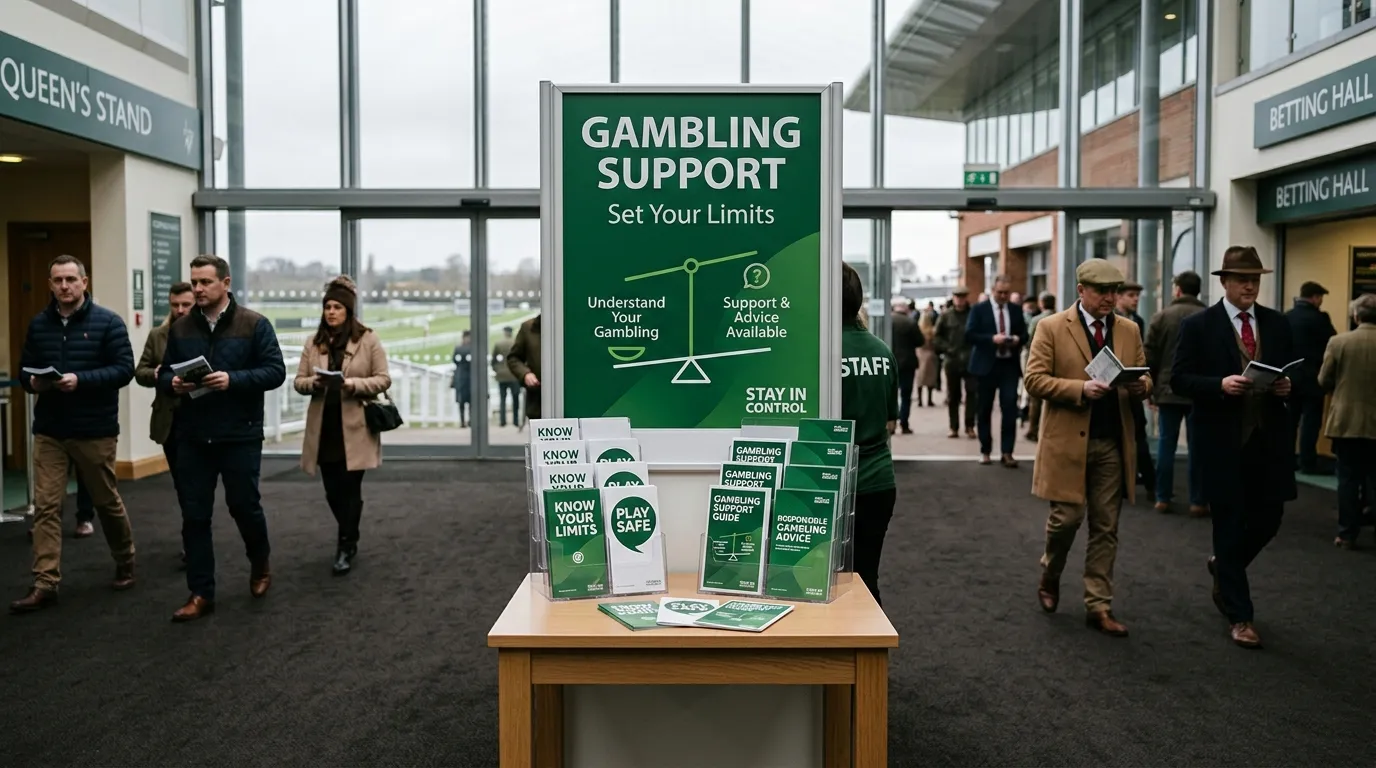
If you or someone you know is experiencing difficulty with gambling, GamCare provides free support and counselling via its helpline and online chat, and BeGambleAware.org offers information, advice and referral to treatment services. The National Gambling Helpline is available on 0808 8020 133. Cheltenham is four days. Your financial wellbeing is permanent.